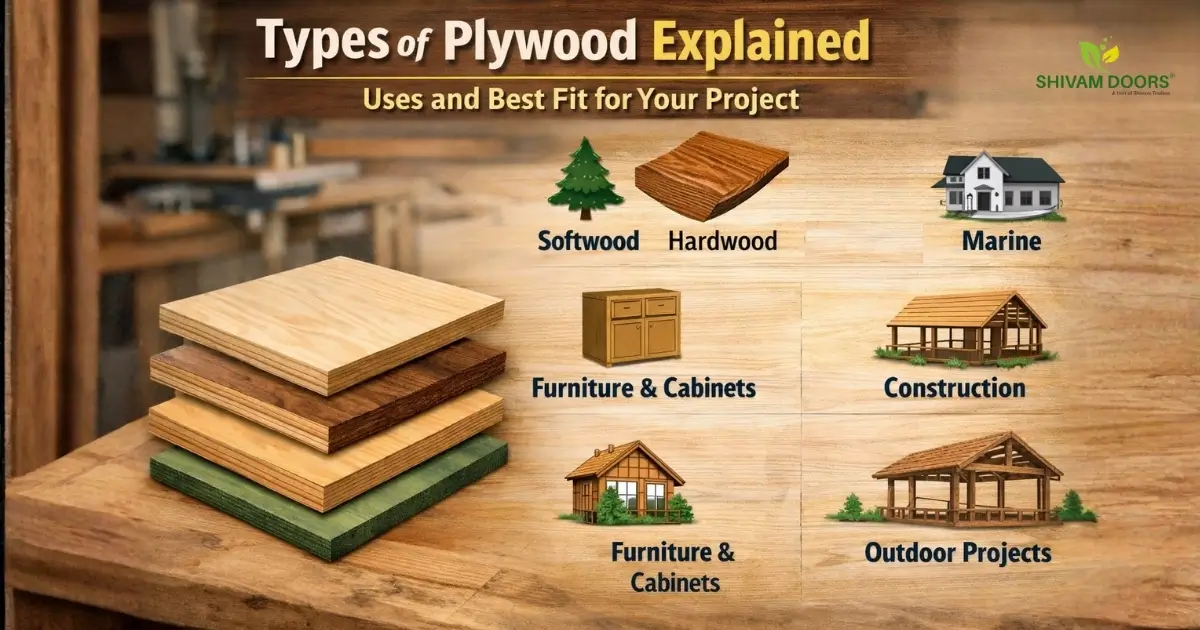
Plywood is one of the most versatile and widely used engineered wood products in construction,
interiors, and furniture making. Its strength, durability, and adaptability make it suitable
for everything from home furniture to heavy-duty structural applications. However, understanding
the types of plywood, their grades, and correct usage is essential to choosing the right material
for your project and ensuring long-term performance.
What Is Plywood and Why Is It So Popular?
Plywood is made by bonding thin layers of wood veneer together with strong adhesives, with
each layer placed perpendicular to the next. This cross-grain structure gives plywood superior
strength, stability, and resistance to warping compared to solid wood. Because of this, plywood
is widely preferred by architects, interior designers, and contractors across residential and
commercial projects.
Common Types of Plywood and Their Uses
Commercial Plywood:
This is one of the most commonly used options for interior furniture, cabinets, and partitions.
It offers a good balance of strength and affordability and is ideal for dry indoor environments.
Marine Plywood:
Designed for high-moisture areas, marine plywood is made using waterproof adhesives and
high-quality veneers. It is often used in kitchens, bathrooms, coastal constructions, and even
boat interiors.
Exterior Plywood:
Exterior plywood is treated to withstand moderate moisture exposure and weather changes.
It is suitable for outdoor furniture and semi-exposed construction areas.
Shuttering Plywood:
Used mainly in construction, shuttering plywood supports concrete during casting. Known for
its reusability and strength, it plays a critical role in structural work.
Understanding Plywood Grades
Knowing plywood grades helps you judge quality and appearance. Grades typically range from
A to D, where Grade A has a smooth, defect-free surface suitable for visible applications,
while lower grades may have knots and patches, making them better for structural or concealed
uses. Selecting the right grade ensures durability and aesthetic appeal where needed.
Plywood Uses Across Different Projects
The wide range of plywood uses makes it suitable for multiple industries. In residential spaces,
plywood is used for wardrobes, beds, modular kitchens, wall paneling, and flooring bases. In
commercial settings, it supports office furniture, retail fixtures, and partitions. In
construction, it is essential for formwork, scaffolding, and temporary structures.
Shuttering Plywood Benefits in Construction
One of the most valued construction materials is shuttering plywood due to its high load-bearing
capacity and durability. Key shuttering plywood benefits include resistance to moisture, smooth
concrete finish, ability to withstand multiple uses, and cost efficiency over repeated construction
cycles. These qualities make it indispensable for builders and contractors.
How to Choose the Best Plywood for Your Project
Choosing the right plywood depends on factors such as moisture exposure, load requirements,
surface finish, and budget. For interiors, commercial or BWP plywood may suffice, while
high-moisture areas demand marine-grade plywood. Structural applications require strong
shuttering or exterior plywood. Consulting experienced suppliers ensures you select plywood
that meets both functional and safety standards.
Bottom Line
Understanding the different types, grades, and applications of plywood helps you make informed
decisions and avoid costly mistakes. Whether you’re working on furniture, interiors, or
construction, selecting the right plywood ensures durability, safety, and value for money.
For expert guidance and quality plywood solutions, Shivam Traders offers trusted
materials and industry knowledge to support projects of all scales.