Introduction
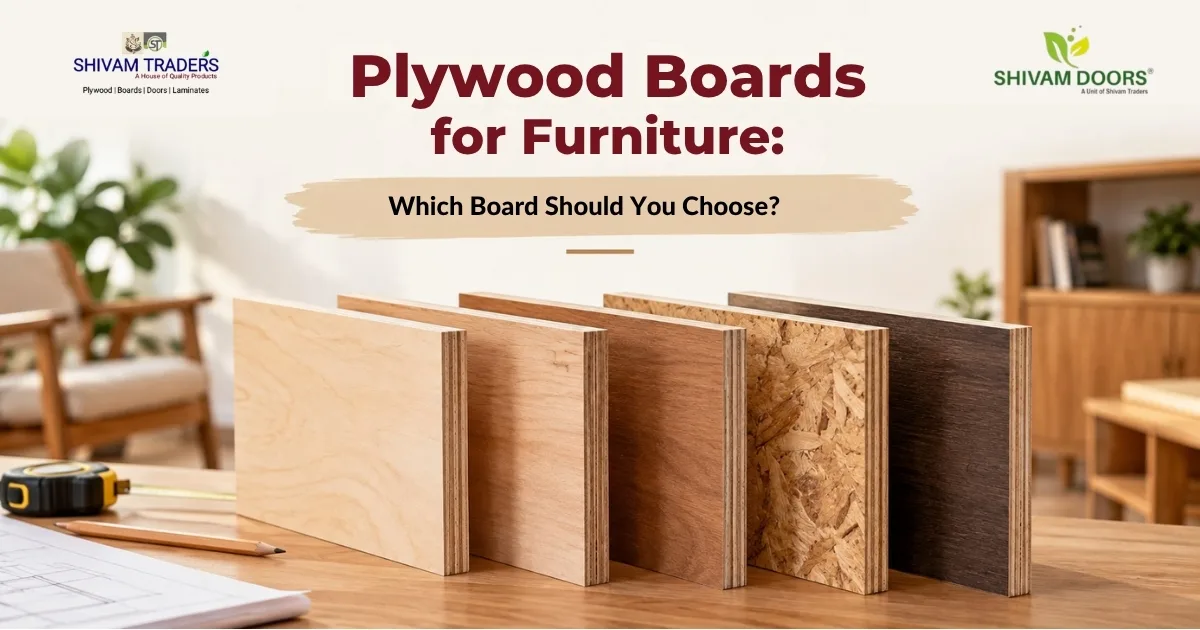
Picking the right board changes how furniture looks, lasts and performs. Get it wrong and you're dealing with swollen edges, warped panels or a wardrobe door that won't sit flush. Get it right and the piece holds up for years without fuss. This guide from Shivam Traders explains how to compare plywood boards for furniture, so you spend on the grade that actually suits the job rather than the one that simply looks the part.
What Makes Plywood Suitable for Furniture?
Plywood gets its strength from layers of wood veneer glued together with the grain running in alternating directions. That cross-layering is what stops it splitting or bowing the way solid timber sometimes does. When comparing plywood boards for furniture, don't just reach for the thickest sheet on the shelf, grade and thickness matter more than bulk alone.
A few things worth checking before buying: the grade, the thickness, how solid the core feels, the surface condition and whether it carries proper certification. An 18mm sheet tends to suit wardrobes, cabinets and other structural parts, while thinner sheets work fine for backs or lighter fittings.
Which Plywood Grade Should You Choose?
MR Plywood for Dry Areas
Moisture-resistant plywood is a sensible pick for furniture kept away from regular water contact, think bedroom wardrobes, study tables and living room units. It suits fairly dry rooms and tighter budgets without asking you to pay for protection you don't need.
BWR Plywood for Better Moisture Resistance
BWR holds up against moisture noticeably better than MR, which makes it a stronger option for Indian homes where humidity creeps in regardless of the season. Wardrobes and storage units in rooms where dampness is even a slight possibility usually fare better with BWR.
BWP or Marine Plywood for Wet Areas
Kitchen cabinets, sink units and bathroom furniture face far more water exposure, so they need something built for it. BWP or marine grade plywood is made for exactly these tougher conditions. If you're choosing cabinet plywood for anywhere near a sink, this is generally the safer call, price shouldn't be the only factor. Think about the load it will carry and how it's actually going to be installed too.
What About Modular Furniture?
Precision matters even more with factory made or modular pieces. Panels need to line up, so uniform thickness across the sheet makes fitting and installation far cleaner. Decent modular furniture boards should hold screws firmly, offer a stable surface and stay consistent in size from one sheet to the next.
For modular kitchens, wardrobes and storage systems, calibrated plywood is worth considering because its tightly controlled thickness supports more accurate cutting, joining and finishing. That said, calibration alone doesn't guarantee suitability, the grade and construction still need checking.
Plywood vs Other Materials
MDF and particle board have their place too, particularly where a smooth finish or a lower upfront cost is the priority. Even so, plywood generally wins on durability, screw holding and moisture resistance once the right grade has been chosen.
So don't judge furniture boards purely on how they look in the showroom. Check the edges, read the markings and confirm the applicable standard before committing to a purchase.
How to Select the Right Board
Start with the room, how much moisture it sees and what the furniture actually is. From there, weigh up thickness, expected load, finish and budget. Kitchens and bathrooms call for moisture resistance first, while bedrooms and living areas can often manage with a grade suited to that calmer environment rather than paying extra for marine ply everywhere.
At Shivam Traders, buyers can compare plywood and other wood products side by side for their project. Checking the specification properly, rather than guessing, is what stops swelling, weak joints and early replacement further down the line.
Conclusion
The priciest board on the shelf isn't automatically the best one. Plywood boards for furniture should be matched to how they'll actually be used, based on location, exposure and purpose. MR works for dry spots, BWR handles more moisture, and BWP suits the wettest areas. Check the grade, thickness, core and certification, and you'll land on a board that balances strength, durability and cost. Shivam Traders can help you compare suitable options before you buy.